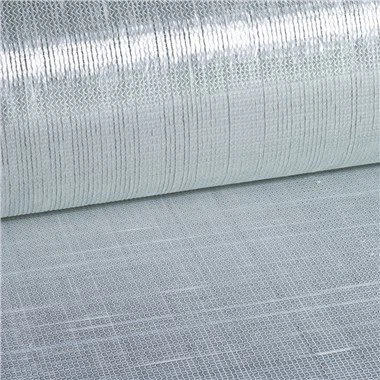
Building Insulation, Why Use Mineral Wool ?
Mar 31, 2022
Speaking of mineral wool, many people may have only heard that this is a wall insulation material, but it is more than that simple
After the first volcanic eruption on the island of Hawaii, the inhabitants of the island found strands of ore with a soft texture after melting, which was the mineral wool fiber that was originally recognized by humans. Later, the production process of mineral wool is actually a simulation of the natural process of Hawaiian volcanic eruption. Mineral wool products are all made of high-quality basalt, dolomite, etc. as the main raw materials. After being melted at a high temperature above 1450 ℃, they are centrifuged at a high speed by an internationally advanced four-axis centrifuge to form fibers. After the agent is collected by the cotton collector, the rock wool products of different specifications and uses are formed by the pendulum method and the three-dimensional method of cotton laying and then curing and cutting.
Because mineral wool board is an artificial inorganic fiber processed by high temperature melting, it has the characteristics of light weight, low thermal conductivity, heat absorption, non-combustibility, etc. These characteristics make it a very good building insulation material, and It is also favored in various fields that require large-area insulation materials, such as power plants, chemical plants, large kilns, and shipbuilding.
Theoretically, because the mineral wool board is an inorganic fiber, the organic content standard is 2.9%. Inorganic compounds usually do not contain carbon elements and have smaller molecules, which determines their better thermal stability. But there is one thing that everyone must pay attention to, that is, mineral wool board, although thermal insulation, can only be used for external wall thermal insulation, because it has fibers that will cause dust pollution and irritate the skin, so it cannot be used for internal wall thermal insulation. If it is to be used indoors, it needs to be completely enclosed with other materials, such as installed in an airtight interlayer.
Finally, let me say that the mineral wool board is not often noticed by people, that is, the sound insulation effect. Perhaps for personal reasons, I have been extremely unsuitable for noisy environments since I was a child, so when buying a house, I can choose a quiet neighborhood far away from the noisy environment such as the market, and it must be the innermost location of the neighborhood. I believe that there are not a few people who have the same demands as me, or families with the elderly and children, also want a quiet and comfortable environment at home, and sound insulation has become a very important demand.
We see in many professional recording studios that they have a lot of fiber cotton or felt covering the walls, because these are very good sound insulation materials. But as a developer, it is impossible to lay these materials on the wall for sound insulation, so the mineral wool board with sound insulation effect once again shows his advantages. Buildings with mineral wool boards have much lower indoor noise than buildings without mineral wool boards. Even in the busy city, they can create a quiet space for the family.
Fire prevention, heat preservation, sound insulation, and mineral wool board almost meet all my demands for building materials. How can such a good material not be recommended to everyone?