Aerogel Felt for Storage Tank and Vessel Insulation
Nov 12, 2026
Storage tanks and process vessels often operate at temperatures significantly above or below the surrounding environment. Without suitable insulation, they may experience excessive heat loss or heat gain, unstable process temperatures, surface condensation, high energy consumption and corrosion under insulation.
Aerogel felt is increasingly used in tank and vessel insulation systems because it provides low thermal conductivity in a thin, flexible format. It can conform to curved surfaces and complex details while reducing the overall insulation thickness.
This article explains where aerogel felt can be used, what benefits it offers and which factors should be considered when designing insulation for industrial tanks and vessels.
Why Storage Tanks and Vessels Need Insulation
Industrial tanks and vessels are used to store or process liquids, gases and bulk materials. Depending on the process, insulation may be required to maintain temperature, prevent condensation or protect personnel.
Common insulation objectives include:
Reducing heat loss from hot storage tanks
Limiting heat gain into cold vessels
Maintaining a stable process temperature
Preventing product solidification or crystallization
Controlling surface condensation
Protecting workers from hot surfaces
Reducing heating and cooling loads
Supporting freeze protection
Improving process efficiency
The required insulation system depends on the stored medium, operating temperature, tank size, climate and maintenance conditions.
What Is Aerogel Felt?
Aerogel felt is a flexible insulation material made by combining silica aerogel with a fibrous reinforcement. Its nanoporous structure restricts heat transfer, allowing it to provide strong thermal resistance without requiring a bulky insulation layer.
Compared with many traditional tank insulation materials, aerogel felt offers:
Low thermal conductivity
Reduced insulation thickness
Flexibility around curved surfaces
Hydrophobic grades for moisture resistance
Good performance during thermal cycling
Easier fitting around nozzles and structural details
Lower insulation volume
Compatibility with multilayer installation
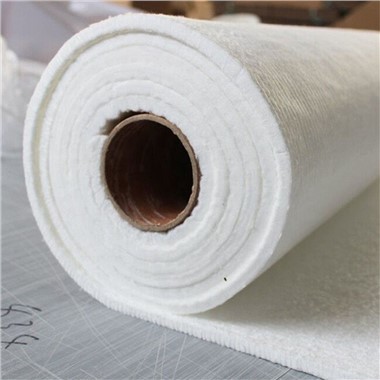
Products such as aerogel thermal insulation felt are normally supplied in rolls and can be cut according to the tank diameter and installation layout.
Where Aerogel Felt Can Be Used
Hot Storage Tanks
Hot storage tanks are commonly found in chemical plants, refineries, food-processing facilities and energy projects. Typical stored materials include hot water, thermal oil, bitumen, chemicals and temperature-sensitive liquids.
Aerogel felt helps reduce heat loss through the tank shell and roof. This can lower the energy required by heaters, coils or heat-tracing systems.
A thinner insulation system can be particularly useful when:
Space around the tank is restricted
Existing supports cannot accommodate thick insulation
The tank is being retrofitted
Overall cladding diameter must be limited
Weight reduction is important
Nozzles and attachments create complicated geometry
Cold and Chilled Vessels
Low-temperature vessels require insulation to limit ambient heat gain and prevent external condensation. If the insulation surface falls below the surrounding air's dew point, water can condense on the outer jacket.
Aerogel felt can be used in suitable cold-service systems for:
Chilled-water tanks
Refrigeration vessels
Cold process equipment
Temperature-controlled storage
Selected cryogenic applications using qualified material grades
For cold service, the insulation material alone is not enough. A continuous vapor-retarding layer is essential to reduce the movement of humid air and water vapor toward the cold surface.
Process Vessels
Reactors, separators, mixing vessels and pressure vessels may require insulation to maintain process stability. Their curved shells and multiple attachments can make rigid insulation difficult to install.
Flexible insulating aerogel felt can be fitted around:
Cylindrical shells
Dished heads
Conical sections
Nozzles
Manways
Agitator connections
Instrument penetrations
Support rings
Skirts and saddles
The material can be installed in several layers, with joints staggered to improve thermal continuity.
Benefits of Aerogel Felt for Tank Insulation
Reduced Insulation Thickness
Storage tanks have large surface areas. A reduction in insulation thickness can therefore make a noticeable difference to the total volume of material, cladding dimensions and installation space.
Aerogel felt may provide the required thermal performance with a thinner system than conventional mineral wool or similar fibrous insulation. The actual difference depends on operating temperature, material grade and design conditions.
Reduced thickness can offer several practical advantages:
Less interference with platforms and ladders
Easier treatment around nozzles
Smaller roof-edge details
Reduced cladding circumference
More clearance between adjacent equipment
Lower material storage and transportation volume
Better Fit on Curved Surfaces
Tank shells, vessel heads and transition sections are not flat. Flexible aerogel felt follows these shapes without requiring large numbers of prefabricated rigid segments.
The material can be cut into sections for vertical, horizontal or circumferential installation. It can also accommodate differences in diameter between shells, heads and adjoining pipework.
Hydrophobic Performance
Water ingress is a common cause of insulation-system failure. Hydrophobic aerogel felt is designed to resist liquid-water absorption, helping the insulation retain its performance if minor water exposure occurs.
However, hydrophobicity does not replace:
Weather-resistant cladding
Sealed joints
Proper roof flashing
Drainage details
A vapor barrier for cold service
Regular maintenance and inspection
The complete insulation system must still prevent water from entering and becoming trapped against the metal surface.
Resistance to Thermal Cycling
Process vessels may undergo repeated heating, cooling, startup and shutdown cycles. These temperature changes cause the vessel shell and insulation system to expand and contract.
Flexible aerogel felt can accommodate movement without the cracking associated with some rigid materials. This is useful around vessel heads, nozzles and transitions where movement may be concentrated.
Reduced Heat Loss and Energy Use
An effective insulation system limits heat transfer between the vessel and its surroundings. For hot tanks, this reduces the energy needed to maintain the stored material at the required temperature.
The potential energy saving depends on:
Uninsulated surface temperature
Tank dimensions
Ambient conditions
Insulation thickness
Operating hours
Required process temperature
Condition of the existing insulation
A project-specific heat-loss calculation should be performed before the insulation thickness is selected.
Tank Areas Requiring Special Attention
A tank cannot be insulated successfully by treating only the main shell. Several details can create thermal bridges or allow moisture to enter the system.
Tank Roof
The roof may account for a significant portion of the total heat transfer. Its slope, drainage pattern and penetrations require careful insulation and cladding design.
Roof insulation should not interfere with:
Rainwater drainage
Vents
Gauging equipment
Access hatches
Pressure-relief devices
Walkways and handrails
The cladding should be arranged so that water flows away from seams and penetrations.
Bottom and Foundation Area
Tank bottoms may require specialized insulation depending on the operating temperature and foundation design. The insulation must support the expected mechanical load without excessive compression.
Aerogel felt is generally more suitable for shells and complex details than for structural load-bearing positions unless it is incorporated into a specifically engineered support system.
Nozzles and Manways
Nozzles, manways and instrument connections interrupt the main insulation layer. Open gaps around these components can create significant heat loss and local surface-temperature differences.
Aerogel felt can be cut into smaller pieces or integrated into removable covers around components that require periodic access.
Support Rings and Stiffeners
Support rings, stiffeners and reinforcing plates can create thermal bridges. The insulation should be shaped to maintain continuous coverage without leaving cavities where water may collect.
Vessel Skirts and Saddles
Skirts and saddles require special treatment because they carry structural loads and may transfer heat away from the vessel. The insulation design must balance thermal performance, access and structural requirements.
Ladders and Platforms
Insulation and cladding must be carefully terminated around ladder brackets, platform supports and handrail connections. These penetrations should be sealed to reduce water entry.
Multilayer Installation of Aerogel Felt
Aerogel felt is often installed in multiple layers on tanks and vessels. A typical installation process includes the following stages.
1. Surface Inspection and Preparation
The vessel surface should be clean, dry and free from loose rust, oil and other contaminants. Any specified protective coating must be fully cured before insulation is installed.
Areas around welds, supports and penetrations should be inspected before they become concealed.
2. Installation of the First Layer
The first aerogel layer is fitted closely against the vessel surface. Gaps should be minimized, but the material should not be excessively compressed.
Temporary bands or approved fastening systems can hold the material in position.
3. Additional Insulation Layers
Further layers are installed until the calculated thickness is reached. Joints between adjacent pieces should be staggered from one layer to the next.
Staggered joints help reduce:
Direct heat-transfer paths
Open gaps through the insulation
Moisture-entry paths
Localized hot or cold spots
4. Retention System
Large vertical surfaces require a reliable method of supporting the insulation. The design may use bands, pins, clips, mesh or other approved retaining components.
The system must prevent the felt from sliding, sagging or forming gaps during operation.
5. Vapor Retarder for Cold Service
For cold tanks and vessels, a continuous vapor-retarding system should be installed on the warm side of the insulation.
All seams, penetrations and terminations must be sealed. Even small openings may allow humid air to enter the system and condense against the cold surface.
6. Protective Cladding
The external jacket protects the insulation from weather, impact and mechanical damage. Aluminum, stainless steel or other suitable cladding materials may be used.
Cladding selection depends on:
Outdoor or indoor installation
Corrosive atmosphere
Wind exposure
Fire requirements
Cleaning methods
Mechanical-damage risk
Controlling Corrosion Under Insulation
Corrosion under insulation, commonly known as CUI, can occur when water enters the insulation system and remains in contact with a carbon-steel or stainless-steel surface.
Aerogel felt can support CUI-control strategies because hydrophobic grades resist liquid water and the thinner system may make detailing easier. However, no insulation material can prevent CUI by itself.
An effective CUI-control plan should include:
Appropriate surface coating
Dry installation conditions
Weather-resistant cladding
Sealed roof and nozzle penetrations
Correctly formed overlaps
Drainage at suitable locations
Periodic inspection
Prompt repair of damaged cladding
Removable covers at inspection points
Special attention should be given to tank roofs, platform connections, support rings and cladding terminations because these areas are common routes for water entry.
Aerogel Felt vs Conventional Tank Insulation
| Selection factor | Aerogel felt | Mineral wool | Rigid foam |
|---|---|---|---|
| Material form | Flexible roll | Flexible or semi-rigid sections | Rigid boards or segments |
| Thermal performance per thickness | High | Moderate | Moderate to high |
| Curved-surface fitting | Good | Good | Requires shaping |
| Overall thickness | Often lower | Generally higher | Application-dependent |
| Hydrophobic grades | Available | Available for selected products | Material-dependent |
| Load-bearing capability | Limited | Limited | Varies by foam type |
| Complex-detail installation | Relatively convenient | Convenient but may be bulky | More cutting required |
| Initial material cost | Higher | Usually lower | Varies |
| Space-limited retrofits | Well suited | May require more clearance | Project-dependent |
Aerogel felt is particularly valuable where conventional insulation would make the system too thick, heavy or difficult to install. For large, uncomplicated tank shells with sufficient space, conventional materials may remain more economical.
Hybrid systems can also be used. Aerogel may be applied at thermal bridges, nozzles or restricted areas while another material covers the main shell.
How to Select the Right Aerogel Felt
Confirm the Temperature Range
Verify that the selected grade is suitable for the minimum, normal and maximum service temperatures. High-temperature and cryogenic applications may require different aerogel formulations and facing materials.
Request Temperature-Dependent Thermal Conductivity
A single thermal conductivity value does not describe performance over the complete operating range. Ask for data at relevant mean temperatures and use it in the insulation calculation.
Determine the Required Thickness
The required thickness should be based on the project objective, such as:
Maximum allowable heat loss
Minimum or maximum outer-surface temperature
Condensation control
Freeze protection
Process-temperature stability
Personnel protection
Check Water-Repellent Performance
For outdoor tanks, confirm whether the product is hydrophobic and request relevant test information. Moisture resistance should be considered together with cladding and seam design.
Review Fire Performance
Tank farms and chemical facilities may have strict requirements for combustibility, flame spread and smoke generation. The complete system-including insulation, vapor retarder, adhesive and jacket-should meet the applicable project requirements.
Evaluate Mechanical Handling
The selected felt should tolerate cutting, wrapping and fastening without excessive breakage. It should also maintain reasonably uniform thickness after installation.
Confirm Roll Dimensions
Roll width and length affect joint quantity, cutting waste and installation speed. Wider rolls may reduce seams on large tank shells, while narrower rolls may be easier to handle around vessel heads and complex fittings.
Common Installation Problems
Several installation errors can reduce the performance of tank and vessel insulation:
Installing aerogel felt over wet or contaminated surfaces
Leaving gaps between adjacent sections
Aligning joints through all insulation layers
Compressing the material excessively
Providing insufficient support on vertical surfaces
Failing to seal roof penetrations
Allowing water to collect behind the cladding
Damaging the vapor retarder during jacketing
Ignoring thermal movement
Using incompatible tapes, sealants or coatings
Leaving inspection openings unprotected
Quality checks should be completed at each installation stage rather than waiting until the entire vessel has been clad.
Information Buyers Should Provide
When requesting aerogel felt for tank or vessel insulation, provide the supplier with:
Tank or vessel dimensions
Equipment drawings
Stored or processed medium
Normal and maximum operating temperatures
Minimum startup or shutdown temperature
Indoor or outdoor installation
Ambient temperature and humidity
Wind and weather exposure
Target surface temperature
Allowable heat loss or heat gain
Required fire performance
Cladding material
Project standards
Estimated insulation area
This information allows the supplier to recommend an appropriate product grade, thickness and roll size.
Frequently Asked Questions
Is aerogel felt suitable for large storage tanks?
Yes. It can be installed over large curved surfaces, particularly where reduced insulation thickness or limited space is important. The retention and cladding systems must be designed for the tank size and wind conditions.
Can aerogel felt prevent tank condensation?
It can help maintain the external surface above the dew point when the correct thickness is used. Cold-service systems also require a continuous vapor retarder and sealed penetrations.
Can aerogel felt be installed over existing insulation?
It may be possible in selected retrofit projects, but the existing insulation must first be inspected for moisture, deterioration and corrosion. Wet or damaged insulation should not simply be covered.
Does hydrophobic aerogel eliminate the risk of CUI?
No. Hydrophobicity helps resist liquid-water absorption, but CUI control also depends on surface coatings, cladding, seam design, drainage and regular inspection.
Can aerogel felt be used on vessel heads and nozzles?
Yes. Its flexibility makes it suitable for curved heads, nozzles and other complex details. Careful cutting and staggered multilayer installation are required to avoid gaps.
Conclusion
Aerogel felt provides a thin, flexible and thermally efficient option for insulating storage tanks and process vessels. It is particularly useful on curved surfaces, restricted installations, vessel heads, nozzles and areas where conventional insulation creates excessive thickness.
Successful tank insulation depends on the complete system. Correct thickness calculation, multilayer joint arrangement, reliable retention, moisture control and weather-resistant cladding are all essential.
When properly selected and installed, aerogel felt insulation can help reduce energy loss, stabilize process temperatures, control condensation and improve the long-term performance of industrial tanks and vessels.