Centrifugal Glass Wool
Mar 08, 2022
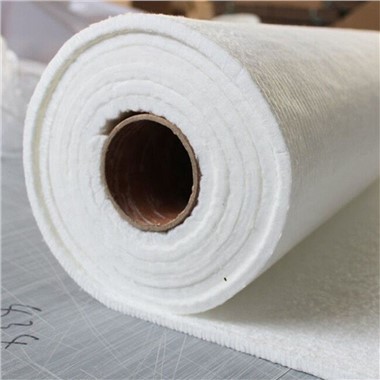
Centrifugal glass wool is a porous sound-absorbing material with good sound-absorbing properties. The reason why centrifugal glass wool can absorb sound is not due to the rough surface, but because it has a large number of tiny pores and holes connected to the inside and outside. When the sound wave is incident on the centrifugal glass wool, the sound wave can enter the interior of the material along the pores, causing the vibration of the air molecules in the gap. Due to the viscous resistance of the air and the friction between the air molecules and the pore walls, the sound energy is converted into heat energy and lost.
Sound absorption
Centrifugal glass wool has good sound absorption performance for medium and high frequencies. The main factors affecting the sound absorption performance of centrifugal glass wool are thickness, density and air flow resistance. Density is the weight of material per cubic meter. Air flow resistance is the ratio of air pressure and air velocity on both sides of a material per unit thickness. Air flow resistance is the most important factor affecting the sound absorption performance of centrifugal glass wool. If the flow resistance is too small, it means that the material is sparse, and the air vibration is easy to pass through, and the sound absorption performance is reduced; For centrifugal glass wool, there is an optimal flow resistance for sound absorption.
In practical engineering, it is difficult to measure air flow resistance, but it can be roughly estimated and controlled by thickness and bulk density.
1.With the increase of thickness, the sound absorption coefficient of medium and low frequency increases significantly, but the high frequency does not change much (high frequency absorption is always larger).
2. When the thickness is unchanged, the bulk density increases, and the sound absorption coefficient of medium and low frequency also increases; but when the bulk density increases to a certain extent, the material becomes dense, the flow resistance is greater than the optimal flow resistance, and the sound absorption coefficient decreases instead. For centrifugal glass wool with a bulk density of 16Kg/m3 with a thickness of more than 5cm, the low frequency 125Hz is about 0.2, and the sound absorption coefficient of the medium and high frequency (>500Hz) is close to 1. When the thickness continues to increase from 5cm, the low-frequency sound absorption coefficient gradually increases. When the thickness is greater than 1m, the low-frequency 125Hz sound absorption coefficient will also be close to 1. When the thickness remains unchanged and the bulk density increases, the low-frequency sound absorption coefficient of centrifugal glass wool will also continue to increase. When the bulk density is close to 110kg/m3, the sound absorption performance reaches the maximum value, and it is close to 0.6-0.7 at a thickness of 50mm and a frequency of 125Hz. When the bulk density exceeds 120kg/m3, the sound absorption performance decreases, because the material becomes denser, and the medium and high frequency sound absorption performance is greatly affected. When the bulk density exceeds 300kg/m3, the sound absorption performance decreases a lot. The thickness of sound-absorbing glass wool commonly used in architectural acoustics is 2.5cm, 5cm, 10cm, and the bulk density is 16, 24, 32, 48, 80, 96, 112kg/m3. Usually 5cm thick, 12-48kg/m3 centrifugal glass wool is used.
The sound absorption performance of centrifugal glass wool is also closely related to the installation conditions. When there is an air layer behind the glass wool board, the sound absorption effect is similar to that of a glass wool board with the same thickness without an air layer. In particular, the sound absorption performance of medium and low frequency will be greatly improved than that of the material attached to the hard bottom surface. The sound absorption coefficient will increase with the increase of the thickness of the air layer, but the effect will not be obvious after increasing to a certain value.
Stacked use
Use glass wool with different bulk density to stack together to form a form of gradually increasing bulk density, which can achieve greater sound absorption effect. For example, stacking a layer of 2.5cm thick 24kg/m3 cotton board and a layer of 2.5cm thick 32kg/m3 cotton board together has a better sound absorption effect than a layer of 5cm thick 32kg/m3 cotton board. The 24kg/m3 glass wool board is made into a 1m-long wedge with a triangular section, the surface density of the material increases gradually, and the average sound absorption coefficient can be close to 1. Glass wool is a product that uses a unique centrifugal technology to fibrillate molten glass and add an environmentally friendly formula binder based on thermosetting resin. It is a product made of glass fibers with a diameter of only a few microns. Elastic fiberglass products, and can choose moisture-proof veneer in-line compounding according to the different requirements of customers. Because of its large number of tiny air gaps, it can play the role of thermal insulation, sound absorption and noise reduction, and safety protection. The best material for thermal insulation, sound absorption and noise reduction. Unique advantages, unique technology, the rebound rate after compression packaging is 99.2%. Soft, slender fiberglass minimizes fluff during construction