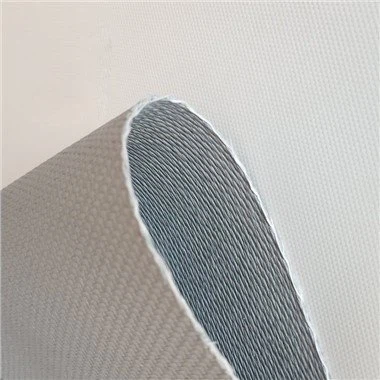
What Is Aerogel Felt?
Apr 01, 2026
Aerogel felt, often referred to as aerogel blanket, is a composite insulation material developed to solve the practical limitations of traditional aerogel. While aerogel itself is known for its extremely low thermal conductivity, its brittle nature makes it difficult to use directly in industrial environments. Aerogel felt addresses this issue by embedding aerogel particles into a fibrous carrier such as glass fiber or polyester, forming a flexible and durable insulation blanket.
From a materials science perspective, aerogel is a highly porous solid with a nanoscale structure. More than 90% of its volume is air, which significantly restricts heat transfer through conduction, convection, and radiation. This unique structure explains why aerogel is often called a "super insulation material." However, pure aerogel lacks mechanical strength, which limits its usability. The felt structure provides reinforcement, allowing the material to withstand handling, vibration, and installation stress.
How It Works
The thermal performance of aerogel felt comes from the nanoporous network inside the aerogel. The pore size is so small that it inhibits the movement of air molecules, effectively reducing heat conduction. At the same time, the fibrous matrix supports the aerogel and adds structural integrity without significantly increasing thermal conductivity.
In practical terms, this means aerogel felt can achieve the same insulation effect as traditional materials like mineral wool or calcium silicate, but at a much thinner thickness. This is particularly important in industries where space is limited or where reducing insulation thickness can improve system efficiency.
Key Technical Advantages
Compared with conventional insulation materials, aerogel felt offers several distinct advantages:
Ultra-low thermal conductivity: Maintains stable insulation performance even under extreme temperatures.
Thin and space-saving: Reduces insulation thickness while achieving equivalent or better results.
Flexibility and ease of installation: Can be cut, wrapped, and installed on complex surfaces.
Hydrophobic properties: Resists water absorption, helping prevent corrosion under insulation (CUI).
Fire resistance: Typically non-combustible and suitable for high-temperature applications.
These characteristics make aerogel felt particularly suitable for demanding industrial conditions.
Typical Industry Applications
In the oil and gas sector, aerogel felt is widely used for insulating pipelines, valves, and storage tanks. Its thin profile reduces overall system weight and allows easier maintenance access.
In power generation and petrochemical plants, it is applied to high-temperature equipment where energy efficiency and safety are critical. The material helps minimize heat loss and improves operational stability.
In the construction field, aerogel felt is increasingly used for building insulation, especially in renovation projects where space constraints limit the use of thick insulation layers.
It is also gaining traction in transportation industries, such as automotive and rail, where lightweight materials contribute to energy efficiency.
Conclusion
Aerogel felt represents a practical evolution of aerogel technology. By combining nanoscale insulation performance with macroscopic flexibility and strength, it bridges the gap between laboratory materials and real-world industrial needs. As energy efficiency standards continue to rise, aerogel felt is expected to play a more important role in advanced insulation systems.